keynote speakers
Click on a picture to view talk abstract.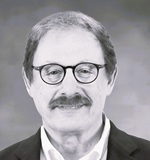
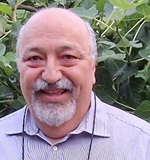


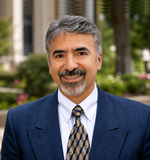
Title: AI Data Centers: A strategic view of computing growth, grid constraints, environmental impacts, and governance challenges.
Director, Robert W. Galvin Center for Electricity Innovation
Illinois Institute of Technology
10 West 35th Street, Suite 1600, Chicago, Illinois 60616
http://www.galvincenter.org
The rapid growth of artificial intelligence is driving unprecedented investment in large-scale data centers. These facilities provide the computing power needed for AI applications, scientific research, and digital innovation, making them critical components of modern infrastructure.
However, AI data centers also create significant challenges. Their increasing electricity demand places pressure on power grids and requires substantial investments in energy generation and transmission. Environmental concerns, including energy consumption, carbon emissions, and water usage for cooling, have intensified the search for sustainable solutions such as renewable energy and more efficient technologies.
Beyond technical issues, AI data centers raise important governance questions related to cybersecurity, data privacy, transparency, and fair access to computing resources. Policymakers, industry leaders, and communities must work together to balance innovation with environmental responsibility and public interest.
A strategic approach that addresses computing growth, energy security, sustainability, and governance will be essential to ensuring the long-term benefits of AI infrastructure.
Dr. Mohammad Shahidehpour is a University Distinguished Professor at Illinois Institute of Technology (Illinois Tech). He also serves as the Galvin Chair Professor and Director of the Robert W. Galvin Center for Electricity Innovation at Illinois Tech. He is a Fellow of IEEE, AAAS (American Association for the Advancement of Science), NAI (National Academy of Inventors), CSEE (Chinese Society for Electrical Engineering) and the Aspen Academy. He is also a Laureate of Khwarizmi International Award and an elected member of the US National Academy of Engineering. He is listed as a highly cited researcher on the Web of Science (ranked in the top 1% by citations demonstrating significant influence among his peers).
Title: Case Studies of Academia-Industry Collaboration on Instrumentation and Measurement for Biomedical Applications: A Snapshot from a Personal Journey.
Professor Emeritus of Applied DSP and VLSI Systems
Honorary Director of the Applied DSP and VLSI Research Group (ADVRG)
University of Westminster
The talk will borrow from my experiences in developing hardware and software for the biomedical industries in various application areas, including Tropical Diseases Diagnostics, to AI assisted image processing for microscopy on mobile phones for underdeveloped and privileged countries as well as advanced societies, breath Analysis for diagnostics, Smart wound dressings for Venous ulcers, SpO2 and other sensors and sensing systems.
The Case Studies to be Covered:
- The Configurable Ultra Low Power (CULP) DSP Processor
- The Exhaled Breath NH3 Sensing and Analysis System
- The PulmoBioMed Breath Collection System
- The Smart Wound Dressing for Chronic Venous Ulcers
- The AKSENSE RIBU System for Bacterial Infection Detection
- Interference Robust SpO2 Meter for Low-Perfusion States
- Non-Invasive Blood Glucose Monitoring
- Malaria and Tropical Disease Diagnosis System
- The European Space Agency/Airbus Reconfigurable On-Board-Processor (ROBP)
Izzet Kale is Professor Emeritus of Applied DSP and VLSI Systems and Honorary Director of the Applied DSP and VLSI Research Group (ADVRG) at the University of Westminster, which he founded in the late 1980s. He previously served as Institute and Research Director, Head of Engineering, and held academic and industry roles including Dean of Engineering at EMU and technical advisory positions for major corporations in Europe, the US, and Japan. His work has contributed to numerous next‑generation ICs, systems, and products in consumer electronics, biomedical instrumentation, and space applications, notably through collaborations with the European Space Agency. A long‑standing IEEE volunteer for nearly four decades, he is the Past Chair of the IEEE UK and Ireland Section (2022–23).
Kale is internationally recognized for over 40 years of contributions to low‑ and ultra‑low‑power DSP and mixed‑signal VLSI systems across sensors, communications, embedded systems, biomedical diagnostics, and satellite payloads. He has led more than 40 national and international applied R&D projects, authored over 390 papers, 11 patents, and 3 books, and supervised 44 PhD completions. His editorial roles include Associate Editor of the RIN Navigation Journal and membership on the IEEE Circuits and Systems Magazine board. He has chaired numerous conferences, including ISCAS 2025 in London, which achieved record participation. His current work focuses on efficient low‑power DSP algorithms, processors, Sigma‑Delta modulators, and intelligent sensor systems for biomedical and space applications.
Title: Toward Trustworthy AI-Native Networks for Future Communications: Intelligence, Security, and Resilience
Professor and University Research Chair in AI-Enabled Secure Networking for Smart Critical Infrastructures
Director, Smart Connected Vehicles Innovation Centre (SCVIC) and CREATE TRAVERSAL Program
Distinguished Lecturer, IEEE Communications Society & IEEE Systems Council
School of Electrical Engineering and Computer Science
University of Ottawa
Artificial intelligence is reshaping the way communication networks are designed, managed, and operated. As we move from AI-enabled to AI-native networks, intelligence is becoming an integral part of the network architecture rather than an add-on capability. This transformation creates exciting opportunities for automation and improved network performance, but it also raises important questions about trust, security, resilience, and human oversight. This keynote will share representative research from our research team toward trustworthy AI-native networking through representative work on edge intelligence, distributed AI, autonomous network management, cyber resilience, digital twins, and AI-enabled protection of critical infrastructures. Drawing on research conducted over the past decade in collaboration with academia, industry, and government partners, I will discuss how these efforts collectively contribute to communication networks that are not only intelligent, but also dependable and secure. I will conclude by highlighting emerging research directions and open challenges that I believe will shape the next generation of communication systems beyond 6G.
Burak Kantarci is a Professor in the School of Electrical Engineering and Computer Science at the University of Ottawa, where he holds the University Research Chair in AI-Enabled Secure Networking for Smart Critical Infrastructures. He is the Founding Director of the Smart Connected Vehicles Innovation Centre (SCVIC) and leads the NEXTCON Research Laboratory. His research focuses on AI-native networking, edge intelligence, trustworthy artificial intelligence, cybersecurity, network resilience, digital twins, and intelligent communication systems for critical infrastructures. He has authored/co-authored more than 300 peer-reviewed publications, holds multiple patents, and has led numerous collaborative research initiatives with industry and government partners. Dr. Kantarci serves as an IEEE Communications Society Distinguished Lecturer and an IEEE Systems Council Distinguished Lecturer. He is an Associate Editor of several leading IEEE journals, including IEEE Transactions on Network and Service Management, IEEE Communications Surveys & Tutorials, and IEEE Networking Letters. He also previously served as an Associate Editor for IEEE Internet of Things Journal and IEEE Transactions on Industrial Informatics. He is the recipient of the IEEE ComSoc Communications Software Technical Committee Technical Achievement Award (2023), the IEEE Canada J. M. Ham Outstanding Engineering Educator Medal (2026), the Ontario Minister's Award of Excellence in Innovation and Entrepreneurship (2021), the George S. Glinski Award for Excellence in Research, the King Charles III Coronation Medal (2025), and multiple IEEE Best Paper Awards. Dr. Kantarci is passionate about advancing trustworthy AI-native communication systems that bridge fundamental research and real-world impact through close collaboration with academia, industry, and government.
Title: AI-Powered Multimodal Wireless Sensor Networks for Human Activity Recognition and Smart Healthcare
Professor and Chair
Computer Science Department
School of Engineering and Digital Sciences
Nazarbayev University, Kazakhstan
Recent advances in artificial intelligence (AI), edge computing, and wireless sensing have revolutionized human activity recognition (HAR) and intelligent healthcare systems. This talk explores the latest developments in AI-powered multimodal wireless sensor networks for human activity recognition, with applications in smart healthcare, assisted living, and remote patient monitoring. By integrating complementary sensing modalities, including wearable inertial sensors, thermal and RGB cameras, and environmental sensors, multimodal systems achieve more accurate, robust, and context-aware recognition than conventional single-sensor approaches. The talk will highlight recent advances in deep learning, multimodal sensor fusion, edge AI for real-time inference, privacy-preserving sensing, and explainable AI techniques that enhance the transparency and trustworthiness of clinical decision support.
Representative applications, including fall detection, elderly care, anomaly detection, and continuous health monitoring, will demonstrate the practical impact of these technologies. The talk will conclude by discussing emerging trends such as foundation models, multimodal large language models, and next-generation intelligent healthcare systems, outlining future opportunities and research challenges for AI-enabled wireless sensor networks.
Prof. Dr. Adnan Yazici is a Full Professor of Computer Science and Chair of the Department of Computer Science at the School of Engineering and Digital Sciences, Nazarbayev University, Kazakhstan. He received his Ph.D. in Computer Science from Tulane University, USA, and previously served on the faculty of the Department of Computer Engineering at Middle East Technical University (METU), Türkiye, for 25 years. Prof. Yazici has authored more than 300 international scientific publications and three Springer books: Fuzzy Database Modeling, Fuzzy Logic in its 50th Year: New Developments, Directions, and Challenges, and Uncertainty Approaches for Spatial Data Modeling and Processing: A Decision Support Perspective. His research interests include artificial intelligence, multimodal wireless sensor networks, data science, machine learning, intelligent database systems, fuzzy systems, and algorithm design and analysis. He received the IBM Faculty Award in 2011 and the Parlar Foundation Young Investigator Award in 2001 in recognition of his research contributions. He has also played leading roles in organizing major international conferences, including serving as Conference Chair of the 23rd IEEE International Conference on Data Engineering (ICDE 2007), the 38th International Conference on Very Large Data Bases (VLDB 2012), and the 23rd IEEE International Conference on Fuzzy Systems (FUZZ-IEEE 2015). Prof. Yazici currently serves on the editorial boards of IEEE Transactions on Fuzzy Systems and Advances in Computational Intelligence, and is a member of the Editorial Advisory Board of Information Systems (Elsevier). His current research focuses on trustworthy AI, multimodal learning, explainable AI, healthcare analytics, and intelligent sensing systems for real-world applications.
Title: Humans and Robots: Partners or Replacements?
The Future of Human–Robot Collaboration in Intelligent Manufacturing
Professor and Department Head
Kate Gleason College of Engineering
Rochester Institute of Technology
Rochester, NY, USA
The rapid advancement of collaborative robotics, artificial intelligence, sensing, and immersive technologies is reshaping the relationship between humans and machines in industrial environments. As manufacturing moves toward Industry 5.0, the central challenge is no longer simply how to automate more tasks, but how to create intelligent robotic systems that can work safely, efficiently, and naturally with humans.
This keynote explores the evolution of industrial human–robot collaboration from conventional safety-centered approaches toward adaptive, human-aware systems. Drawing on research in industrial and laboratory environments, the talk will examine how physiological computing, worker comfort and emotion estimation, situational awareness, augmented reality, digital twins, and Edge AI can be integrated to help robots better understand both the physical and cognitive state of their human collaborators.
Particular attention will be given to the fundamental tension between productivity and safety, and to the role of communication, transparency, predictability, and trust in overcoming this trade-off. The integration of real-time human sensing with digital representations of the workplace provides a pathway toward robotic systems that do not simply react to human presence, but adapt their behavior to the human partner and the evolving context of the task.
As these systems become more capable, however, a broader question emerges: are we developing better collaborators, or systems that may eventually replace us? The final portion of the keynote addresses this question by distinguishing between four fundamentally different meanings of replacement: task replacement, occupation replacement, human replacement, and societal replacement. This distinction is critical, because evidence that robots can outperform humans in narrow, structured tasks does not imply that they can replace the integrated cognitive, physical, social, and adaptive capabilities of human beings.
Current evidence reveals a striking asymmetry. Robots increasingly exceed human performance in precision, repeatability, endurance, scale, and operation in hazardous or highly structured environments. Humans, however, continue to demonstrate substantial advantages in generalization, contextual understanding, adaptability to novel situations, social cognition, creativity, judgment, and the ability to derive purpose and meaning from experience. These differences suggest that the near-term future of intelligent manufacturing is more likely to be defined by complementarity than by wholesale replacement.
The keynote therefore argues for a shift in perspective from humans versus robots to humans with robots. The most important question is not how completely intelligent machines can remove people from work, but how effectively robotic precision, endurance, sensing, and computational intelligence can be combined with human adaptability, creativity, judgment, experience, and values. The future of industrial human–robot collaboration will ultimately be shaped not only by advances in robotics and AI, but by how well we design systems that amplify the strengths of both partners. In this view, the most promising future is not one in which robots replace humans, but one in which humans and robots accomplish what neither could achieve alone.
Dr. Ferat Sahin is Professor and Department Head of Electrical and Microelectronics Engineering at Rochester Institute of Technology (RIT), where he directs the Multi-Agent Bio-Robotics Laboratory and the Century Mold Collaborative Robotics Laboratory. He received his M.S. and Ph.D. degrees from Virginia Tech and joined RIT in 2000.
His research focuses on human-robot collaboration, collaborative and humanoid robotics, AI-driven manufacturing, physiological and affective computing, trust in automation, machine learning, and system-of-systems engineering. His recent work explores human-aware robotic systems, multimodal estimation of human comfort and workload, augmented reality and digital twins for industrial collaboration, and Human-AI and AI-AI collaboration. He has published more than 165 scholarly papers, co-authored two CRC Press books and seven book chapters, and has participated in more than $7.6 million in externally funded research.
Dr. Sahin has also held numerous leadership positions within the IEEE Systems, Man, and Cybernetics Society (SMCS), including Student Activities Chair, Secretary, Treasurer, Vice President for Finance, and Vice President for Human-Machine Systems. He has received the IEEE SMCS Outstanding Contribution Award multiple times for his service to the Society.