invited speakers
Click on a picture to jump to that talk.Title: AI-Driven Digital Innovation: Transforming Education Delivery in Higher Education
Professor & Pro-Rector Academics
GIK Institute of Engineering Sciences & Technology, Pakistan
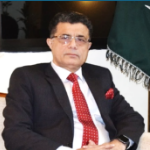
AI is rapidly evolving from a supporting technology into a transformative force in higher education, enabling universities to rethink teaching, learning, assessment, and academic support through continuously available, personalized, and pedagogically guided intelligent assistance at unprecedented scale. The responsible use of AI has significant potential to provide continuous, scalable, and personalized educational assistance, as demonstrated by Harvard’s course-specific AI tools that use pedagogical guardrails, retrieval-augmented generation, and human-in-the-loop approaches to guide students toward solutions while extending educators’ reach. This guard-railed approach may offer a more constructive alternative to simply forbidding AI, potentially reducing academically dishonest use of unrestricted AI tools available online. Furthermore, recent advances in multimodal AI further enhance this potential through educational agents that integrate text, audio, and video to support diverse learning styles and needs, enabling more personalized, dynamic, and interactive learning experiences.
The keynote will explore the convergence of Generative AI, multimodal AI, RAG, intelligent tutoring, AI agents, adaptive learning, learning analytics, and immersive environments to augment educators and enable personalized learning, real-time feedback, and intelligent collaboration, while emphasizing ethical integrity, fairness, human-in-the-loop decision-making, institutional readiness, and responsible governance.
Prof Dr Syed Mohammad Hasan Zaidi is a renowned academic leader and researcher, currently serving as Pro-Rector (Academic) at the Ghulam Ishaq Khan Institute (GIKI). He also served as Acting Rector at GIKI from December 2024 to June 2025, during which he led key academic, research, and institutional development initiatives, including advanced programs in quantum computing and generative AI, and agentic AI. He connected the institute with various national and international organizations through strategic MoUs and projects. During his tenure as Acting Rector, the institute also saw improvements in QS World Rankings.
Dr Zaidi earned his MS and PhD from the University of South Florida, USA. Prior to GIKI, he spent nearly three decades at NUST, where he founded the NUST IT wing (NIIT) – later NUST-SEECS – and served in senior leadership roles for over 21 years, transforming it into one of Pakistan’s top engineering schools. He has authored 100+ research publications, co-founded and co-chairs the annual HONET international symposium since past 23 years, and has received several major national honors, including the NCR IT Excellence Awards, HEC Best Teacher Award, President’s Gold Medals for Best Researcher and Teacher, IEEE Lifetime Achievement Award (Islamabad section), and the President’s Pride of Performance. His research interests include high-speed networks, IoT, cybersecurity, quantum internet, and quantum machine learning.
Title: Development of Rare Earth Alternative Materials (DREAM) for Energy and Photonics Applications
Former Dean, Southern Polytechnic College of Engineering and Engineering Technology
Kennesaw State University
Georgia, USA

III-V semiconductor materials and devices are the preferred solution for many energy and photonic applications due to their wide coverage of direct bandgaps, high electron mobility, high thermal stability, and many other exceptional properties. However, many elements or dopants used in III-V materials can be highly toxic, limited in quantity, or sourced from specific regions with associated geopolitical issues. This paper discusses the Development of Rare Earth Alternative Materials (DREAM) and the potential of ZnO, GeO2, and related materials to transform the semiconductor industry as non-toxic, earth-abundant wide-bandgap materials. For example, the primary hindrance to the broad-based adoption of ZnO has been reliably p-doping these materials to produce a p-n junction. However, this presentation will show that, despite this limitation, ZnO, GeO2, and related materials have been used in numerous applications, before identifying some future areas of interest. These applications and areas of interest include photonics, energy harvesting, spintronics, thermoelectrics, electronics, quantum computing, construction, and nuclear applications.
Ian Ferguson is the former Dean of Southern Polytechnic College of Engineering and Engineering Technology at Kennesaw State University. His research expertise is in compound semiconductor materials and devices for sensors, illumination, energy harvesting, and spintronics applications. He is an international educator and researcher with over 575 refereed journal publications, conference proceedings, books, book chapters, and patents. He is a Fellow of the Royal Society of Arts, Manufactures and Commerce (FRSA), the American Vacuum Society, the Institute of Electrical and Electronic Engineering, the Institute of Physics, Optica, the International Society for Optical Engineering, and a Chartered Physicist.