 |
 |
 |
Riyadh, Kingdom of Saudi Arabia
December 19-21, 2011
International HONET Speakers
The Keynote and the Invited Speakers represent Higher Education and ICT Sectors of Governments, Universities and Educational Research Centers, and the ICT related high-tech Industry and Service Sectors.
| Chief Guest(s) | |
| Eng. Mohamed Jamil
Bin Ahmed Mulla Saudi Arabian Minister of Communications & IT |
 |
| Host/Keynote Speakers | |
| From Saudi Arabia | |
Prof. Dr. Abdullah A. AlOthman Rector, King Saud University Saudi Arabia |
 |
| From International Academia | |
| Engr. Muhammad
Asghar Rector National University of Sciences and Technology Islamabad, Pakistan |
 |
| Prof. Dr. Mustafa A. G. Abushagur,
President Rochester Institute of Technology (RIT), Dubai, UAE. Email: maaeen@rit.edu |
 |
| Topic:
Speaker Biography: |
|
| Prof.
Dr. Ferenc Krausz Lab for Attosecond Physics, Max-Plank Institute, Germany |
 |
| Topic: Attosecond Physics: the Route from Microwave to Lightwave Electronics | |
| From Industry | |
|
Mr. Ahmed Al-Faifi COO Zain KSA |
 |
| Topic: An Emerging Telecommunications Landscape in Kingdom Of Saudi Arabia
Since the inception of Zain-SA operation in 2008, we are
first and foremost a customer centric organization as a part of our
business strategy. Keeping our customers’ needs in mind, we have set
up our organizational level Key Performance Indicators (KPIs) and
goals to ascertain the real experiences of our customers and tailor
our solutions and Services to meet their telecom requirements. In
recent time telecommunication systems have made tremendous
advancement, by introducing new breeds of the technologies, like
UMTS, HSPDA, HSPDA+, and LTE. These technologies offer to
enterprises, corporate businesses and governments to use and deliver
a greater range of services and more interactive applications to
their customers and users. The emerging Telecom technologies are
moving faster than ever before so as the gadgets at users end. The management and deployment of efficient networks for
next generation Networks, particularly for broadband services, is
critical for every country. It enables operators to maintain a
competitive advantage in the current market environment. Demand for
VoIP, Mobile TV, Mobile Banking, Pervasive computing, data services
and multimedia streaming is steadily increasing in Kingdom of Saudi
Arabia from the business and retail sector, and operators needs to
address the technology measures and strategic implications required
to carry out a successful roll-out plan and program. The customer centric approach from Zain will consolidate a
lot of Convergence capabilities to allow our users a transparent use
of applications. Many other parts of the network will undergo
radical change. Billing and operations support systems, for example,
will have to be able to track and monitor services across the
architecture in ways that they don’t have capability at present. The
NGN architecture will provide a standard interface for user to
choose the service and use it as much as needed. The quality of
service will be improve, under the NGN architecture, carriers also
will have a common approach on implementing QOS, an attribute that
currently is handled in multiple ways. That does not mean carriers
will lose the ability to use QOS as a major attribute in
differentiating services. Instead, the NGN design eventually will
put standard attributes and definitions around QOS. Speaker Biography: Ahmed Al-Faifi is a distinguished
engineer with diversity of experiences in the telecom industry.
Ahmed has worked for regulator, vendor and operator which all
contributed to build a unique experience and knowledge from
different stakeholders of the telecom business. Within the
industry Ahmed has been responsible for business planning and
strategy, project management, operation management, sales and
business development. Among other leading employers, Ahmed’s worked
for MoDA in different managerial positions, Ericsson as director new
accounts and business development, CITC (regulator) as manager for
mobile licensing, and joined Zain KSA at startup as chief officer
for planning and business development. Ahmed has also taken the
position of the chief technology officer (CTO) and currently he is
in charge of the operations as chief operations officer (COO). Al-Faifi
attained a BSc from KSU University in 1996 and MSc from KAAU
University in telecom engineering. Al-Faifi also holds a diploma
from Ericsson in mobile technologies. |
|
| Dr Michael Lebby General Manager & Chief Technology Officer, Translucent Inc. |
 |
| Topic:
GaN-on-Si for LEDs and Ge-on-Si for high Efficiency
Multijunction for PVs Speaker Biography: In April 2010, Lebby joined Translucent Inc. based in Palo Alto, California to head up the company's R&D efforts to commercialize rare earth oxides for epitaxial based materials. Lebby brings to Translucent a multifaceted experience base ranging from pure research to commercializing products in the semiconductor industry. Dr. Lebby’s career has spanned all aspects of the optoelectronics business ranging from research and development, operations, manufacturing, and finance, to sales, marketing, and investing. At Translucent, Lebby will be focusing on bringing to market new rare earth oxide based technologies that have been developed over the past 8years. Crystalline based semiconductor rare-earth oxides exhibit a number of attractive properties for advanced substrate and device solutions that include for example: (a) Natural SOI (silicon on insulator) for the electronics industry using 1-step epitaxial growth techniques i.e. growing single crystal silicon onto rare earth oxides that are lattice matched to silicon substrates; (b) Natural virtual substrates that allow rare earth lattice matched oxides to be lattice matched to other semiconductor materials for novel photonics device and solar cell applications. With more than 180 U.S. patents issued in the field of optoelectronics, Lebby has been cited by the USPTO to be in the most prolific 75 inventors in the country from 1988-1997. Lebby will be strengthening Translucent’s extensive patent portfolio into a broader application base. Lebby will be exploring potential licensing opportunities as the Translucent technology becomes more commercialized. In 2005, the IEEE Board of Directors elected Lebby to IEEE Fellow for contributions to optoelectronics technology. In 2007, Lebby became an OSA Fellow for his photonics leadership and contributions to VCSEL technology. In 2008, Lebby was elected into the Cosmos Club in Washington DC. In 1985, Dr. Lebby’s research took him to AT&T Bell Laboratories photonics research from the UK government research center RSRE (Royal Signal and Radar Establishment) in Malvern, Worcestershire. This was followed in 1989 by a move to Motorola’s Phoenix Corporate Research Laboratory in Phoenix, Arizona. Lebby researched and developed III-V compound semiconductor devices and focused his work in bringing the VCSEL technology to full scale manufacturing. Lebby co-founded a market changing datacom product called Optobus™. |
|
| Rodney Wilson Ciena Corporation Canada |
 |
| Topic:
Research Networks Retrospective and Extrapolation
(Live Online Presentation) Advances of the Internet expands the ability for all disciplines of scientists to collaborate in real time more effectively. The days of the lone brilliant Scientist toiling for unique discoveries in the University’s basement labs have long ago yielded to global scale collaborative research. The term e-science has been coined to label collaboration enabled by research networks developed for these express purposes. For over 25 years the research community has developed specialized private networks to accelerate research collaboration. Government s of the industrialized world have recognized the value of these networks and have directed funding for the creation and advancement of Research and Education networks as a reflection of Science, Technology and Education policy. These private networks were created to provide connection to communities of interest and their computers. Some corporations engaged in the design and supply of networking equipment recognize that this unique community of users and their distinct requirements are vehicles useful in dramatically accelerating efforts to create high performance networking technologies . Those so engaged discover, invent and develop new capabilities on the cutting edge of computer communications science and experiment with technologies which echo/serve advances in high performance computing. This collaborative research environment has, for more than a decade, been used to advanced network experimentation before arrival of product or product feature deployment… pre-commercial, pre competitive and have been showcased through a variety of public demonstrations, experiments, proofs, trials and showcases. Speaker Biography: Rodney G. Wilson is the Senior Director of External Research at Ciena Corporation, of Linthicum Maryland where he is focused on driving Ciena’ s technology leadership in transitioning early prototype and emerging advanced technologies from concept to full business implementation. He leads Ciena’ s Global interaction and collaboration program with universities and government research organizations. |
|
| FTTH Council and Cisco International
Speaker Dr. Hosein F. Badran |
 |
| Topic: Taking your life to
new horizons (Tentative) FTTH Worldwide: Global Ranking and Analysis - FTTH in Middle East: market status - Market Drivers for FTTH - Why FTTH has positive effects on: o quality of life o economic development o environment Speaker Biography: Dr. Hosein Badran holds the position
of Regional Chief Technology Officer (CTO) and Distinguished
Systems Architect, with Cisco Systems International, covering
the Middle East and Africa region. With close to 25 years experience
in the telecommunication and networking industry as well as
academia, he has spent the last twelve years with Cisco Systems were
he has held several management and technical consultancy
positions. As a Regional CTO, Dr. Badran is closely engaged with
major operators on the deployment of new IP NGN technologies, as
well as with government agencies, telecom regulators and ministries
for the promotion of new ICT-related country transformation
initiatives. Before joining Cisco, he worked with Nortel Networks in Ottawa,
Canada, as a member of the Magellan Passport development team on
traffic engineering algorithms, then with the International Network
Engineering team on the development of the network engineering
guidelines for multi-service networks with major operators world
wide. He then worked with FORE Systems in Dubai as a Senior
Consulting Engineer covering the Middle East region. He also worked in different capacities at Siemens AG in Munich,
Germany, and at Ecole National Superierure de Telecommunications
(ENST) in Paris, France. Dr. Badran holds a PhD in ATM Networks from Queen’s University in
Canada (1994), M.Sc. in Tele-traffic Engineering from Cairo University
in Egypt (1987), and B.Sc.(Highest Honors) in Electronics and
Communications Engineering from Cairo University (1985). He held
teaching positions at both Cairo and Queen’s universities. Dr.
Badran has been a Senior Member of the IEEE since 1998. He is a
Cisco WiMAX Ambassador and an International ATM Forum Ambassador. He has represented Cisco at several regional and international
forums, including , WSIS, ITU Telecom Africa, and Egyptian
Ministerial Task Force on IPv6 Deployment. Dr. Badran has been selected to be the official Cisco
representative to the newly formed ITU Council Working Group on
Child Protection (CWG-CP), and represents Cisco at the FTTH Council
Middle East. |
|
| Technical Keynote | |
| Dr. Greg Gbur Physics and Optical Science UNC Charlotte, USA |
 |
| Topic: Neglected Discoveries
in the History of Optics It is somewhat surprising to realize that many important and brilliant experiments in the history of science, though extremely influential in their day, have been neglected as time has passed. Looking back on these “lost” discoveries can provide wonderful insights into the methods and philosophy of science, and perhaps help researchers chart a better course through their own efforts. In addition, the people, places, and circumstances of past scientific discoveries are fascinating and entertaining in their own right! In this talk I will try and highlight these ideas by looking at two distinct periods of optical history, and two experiments that have played a huge role in the development of optics but are usually not talked about in a traditional optics curriculum. We begin by looking at the camera obscura work of Ibn al-Haytham during the Islamic Golden Age, circa 1000 C.E., and also note the work of some other important researchers of the time. Al-Haytham’s Book of Optics both preserved the knowledge of ancient Greek researchers and introduced his own discoveries and innovations, and it was an influential text through medieval times. A curious set of circumstances led to al-Haytham’s work, which will be discussed. We conclude by considering the work of François Arago on stellar aberration in the early 1800s. Arago, coming through a very rough patch of his life involving multiple imprisonments, attempted and failed to measure variations of the speed of light from stellar objects. This experiment may be said to be the first proof of special relativity, though it would take another century for this to be appreciated! Arago’s work was important in the acceptance of the wave theory of light, but it also curiously introduced as many misconceptions as it eliminated. Speaker Biography: Greg Gbur is an Associate Professor of Physics and Optical Science at the University of North Carolina at Charlotte, specializing in research in theoretical classical optics. He earned his Ph.D. in physics from the University of Rochester in 2001. He has over sixty peer-reviewed articles in print, including two review articles in Progress in Optics, and is the author of a recent textbook, Mathematical Methods for Optical Physics and Engineering, published by Cambridge University Press. Dr. Gbur also writes a weblog called “Skulls in the Stars” that focuses on explaining concepts in physics, optics, and the history of science. One of his blog posts was recently published in The Open Laboratory 2010, a printed compilation of the best online science writing for 2010. |
|
| Invited Speakers | |
| Dr Sarfraz A. Mian Professor, Chair Management and Marketing Department, School of Business State University of New York, Oswego, USA |
 |
| Topic: The Emerging Role of S&T Parks and Incubators in Building
Dynamic Ecosystems for Accelerating the Development of Technology
Ventures Recent decades have witnessed the emergence of an
innovation-driven global economy, where new
ecosystems of regional concentration of science and
technology (S&T) based entrepreneurial activity has
generated intense worldwide interest. A successful
and economically robust region of innovative S&T
firms serves as an engine of sustained economic
growth. The vivid examples of such regional
ecosystems are the renowned Silicon Valley in the
US, Cambridge Science Park in the UK and Sophia
Antipolis Technopole in France. As policy
makers at various levels of government grapple with
new ideas to stimulate such efforts, they are
searching for appropriate strategies and successful
models to promote these economic development
objectives. While some of these ecosystems have appeared without specific
planning, others are the result of deliberate efforts by
university-industry partnerships with regional authorities. The
planned development of a region of high-tech enterprises is a task,
which is carefully undertaken over the years. One prominent strategy
to support the speedy development of regional entrepreneurial
ecosystems involves the establishment of technology business
incubation facilities that provide the necessary technology
development and enterprise creation support infrastructure. This presentation draws upon the authors’ last several years of research on S&T based regional entrepreneurship implemented through pro-active technology business incubation programs. These programs often employ mechanisms such as science and technology parks and incubators. The paper is based on the last couple of decades of empirical evidence in light of the existing theory developed from studying the characteristics and evolution of such programs. The successful regional program models have resulted in the emergence of several dynamic entrepreneurial ecosystems around the world. Speaker Biography:Sarfraz Mian is Professor of Entrepreneurship & Policy, Chair Marketing & Management in the School of Business, State University of New York, Oswego (www.oswego.edu/~mian). As visiting faculty, he has taught entrepreneurship policy at universities in Europe and South Asia. Mian served as Chair, INFORMS Technology Management (2002-04) and an Executive Member and newsletter editor of the Academy of Management TIM Division (2000-05). He is the co-founder and US Coordinator of North American Innovation Research Network (NAIRNet) and is the Head (PI) of Global Entrepreneurship Monitor, Pakistan. His recent scholarly work include: guest editor of a special issue of IJEIM on ‘Innovative University Programs in Technology Business Incubation’ (2011); two books – ‘Building Knowledge Regions in North America: Emerging Technology Innovation Poles and ‘Science & Technology Based Regional Entrepreneurship: Global Experience in Policy and Program Development (Edward Elgar). Mian’s JBV, Research Policy articles on university business incubation are among the most cited. He has 30 years of experience with international bodies, governments, industry and academia. |
|
|
Dr Israr Ul Haq Sheikh Bugshan/Bell Labs Chair Professor , KFUPM Dhahran |
 |
| Topic: Speaker Biography: |
|
|
Mr. Ammar Jaffri ICT4ALL - 2015Vision Additional Director General (retd) Federal Investigation Authority Pakistan |
 |
| Topic:
Brief Concept Paper on ICT4ALL Vision 2015 Today we are
standing at a crossroad. While few having their own vested interests
at the back of their minds have some serious apprehensions about
future of Pakistan, there are very strong indicators that we would
not only emerge as a very fast developing country in near future but
would also regain our lost grounds very soon. On many occasions in the past we as a nation has shown remarkable
performance in many fields of common life. Agreeing the fact that
there have been some serious lapses in overall management of our
vital institutions but at the same time although in a hard way but
we have learnt some lessons during the process. Today our millions
of Pakistanis are contributing very effectively in making success
stories abroad only because they are working in the environment
which is totally based on use of Information and Communication
Technologies ( ICTs). During past when entire developing world was keeping the
foundations of essential and vital services like health, education,
good governance and creation of employment opportunities on use of
ICTs, we ignored the most effective and powerful vehicle of
development i.e. use of ICTs as enabler in development sector. We can still cover the damage done and catch up with developing
world because as a nation we are adoptive to technology based change
towards improvement. Highest level of teledensity and presence of
Internet cafes even in remote areas is sufficient proof of this
adoptive capabilities. If some best international practices to use ICTs for Development
(ICT4D ) are applied under a joint action campaign by all stake
holders, we can still BOUNCE BACK and emerge as a fast developing
country by the year 2015. This is ICT4ALL Pakistan Vision-2015. Speaker Biography: Mr. Ammar Jaffri holds Master’s
Degrees in Statistics and Computer Sciences and has served more than
forty years in versatile areas of Information Technology and ICT in
different departments of Federal Government that include Ministry of
Interior, Ministry of Defense, ISI, Intelligence Bureau and Federal
Investigation Agency. Mr. Jaffri has successfully Implemented number of mega IT
Projects as Project Director in Government of Pakistan. His most
recent contributions are:- 1) Implementation of a country-wide Immigration Control System
(PISCES) of Federal Investigation Agency. 2) Conceiving and designing of Integrated Boarder Management
System (IBMS) linking all law enforcement agencies and visa
issuance / extension departments of 3) Conceiving, designing and implementation of first cyber crimes
response set-up of Mr. Jaffri is a well known speaker on the subjects of Information
Security, Cyber Security, Business Continuity Planning, e-Banking,
New technologies on Internet and similar topics. Having vast
exposure of national and international issues in his areas of
expertise, Mr. Jaffri has represented Mr. Jaffri is also contributing as Chairman technical committee
of Automated Finger Print Identification System (AFIS) FIA; Focal
person from Pakistan on all International initiatives on cyber
crimes like Group – 8 (USA) OIC-CERT, SAARC-CERT, AP-CERT etc.;
Member of Communication Vigilance Committee Cabinet Division. |
|
| Mr. Tariq J. Qureshi CEO Menaa Group, UAE |
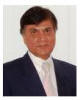 |
| Topic: 4G- LTE- How
will it being major changes in our lives To developed
countries with multiple broadband and telecommunications options,
the launch of LTE is just another higher speed platform, performing
better than 3G. However in countries where GPRS &
Limited 3G is available, this will be a major game changer. Come and learn, how each of the following markets can increase
performance, reduce costs and improve the bottom line with 4G
technologies i.e., Telecom Operators and ISP’s Mr Qureshi is a
telecommunications veteran with 30 years business and
telecommunications companies starting up experience. Menaa Group is a innovative company that is leading the
deployment of technology and applications for utilization by
corporate, industrial and deployment in Middle-East, Africa
and Asia as 4G TD/FDD-LTE networks are deployed in these markets. Prior to joining Menaa group, he also lead starting up Ainfiniti Consulting. Earlier he was General Manager, core team member and visionary that created WiMAX based, Wateen Telecom, the broadband starship of Warid & Abu Dhabi Groups telecom offering. Later at Etisalat-PTCL, as Vice President Commercial Operations, he launched nationwide DSL/OFAN service, CDMA wireless V-Fone nationwide service and laid the foundation for nationwide EvDO Wireless Broadband service. Earlier during his 20 years in Silicon Valley- California, USA he held various Vice President & Director level positions at Luminous Networks, Qwest Communications, International Wireless Communications, East West Infiniti, Versatec-Xerox, Racal Vadic and Nortel. |
|
| Dr Salahuddin Qazi State University of New York, Utica, NY, USA |
 |
| Topic: Challenges
and Potential of using Nanotechnology in Photovoltaic Energy Despite immense potential of solar energy the currently used photovoltaic cells suffers from higher cost due to manufacturing processes they use and are inefficient due to inadequate absorption of sunlight. Ongoing research into photovoltaic energy and new development in nanotechnology is overcoming these challenges. Nanotechnology in the form of quantum dots, nanorods, nanotubes and Graphene have been shown to enhance absorption of sunlight, make low cost flexible solar panels and increase the efficiency beyond standard thermodynamic limit of photovoltaic cells. While quantum dots and nanorods are used to better pick incident light at different wavelength, the use of carbon nanotubes exhibit ballistic electricalconductivity and are very efficient for transporting electrons and providing high electric field at the polymer/nanotubes interfaces. In addition single wall carbon nanotubes offers unique properties of offering a wide range of bandgaps to match the solar spectrum, enhanced optical absorption and reduced carrier scattering for hot carrier transport. In spite of many advantages of nanotubes there are significant problems in the implementation on large scale. The epitaxial Graphene, on the other hand, avoids these problems while retaining many of the important electronic properties of carbon nanotubes. Speaker Biography:
Salahuddin Qazi holds a Ph.D., degree in electrical engineering from
the University of Technology, Loughborough, England, U.K., B.S.
degree in electronic engineering from University college of Wales,
Bangor, U.K., He is currently a full Professor and past chair of
School of Information Systems and Engineering Technology at the
State University of New York Institute of Technology, Utica, New
York. He teaches and conducts research in the area of fiber optics,
wireless communications and nanotechnology and alternative energy.
Dr. Qazi is currently developing instructional material on
Visualization and Manipulation of Nanoscale Components Using Low
Cost AFMs as a part of NSF award and co-edited a CRC Handbook on
“Nanotechnology for Telecommunications.” He has also submitted a
chapter on “Nanotechnology for Photovoltaic Energy,” for a handbook
on a handbook of “Research on Solar Energy Systems and Technologies”
by IGI Global Inc., for which he is also a co-editor. Dr. Qazi has participated as an invited speaker and presenter in
several international conferences and workshops. He was a CO-PI for
a US-Pakistan conference on “High Capacity Optical Networking and
Enabling Technology,” which was jointly supported by the National
Science Foundation (NSF) of USA and the Higher Education Commission
(HEC) of Pakistan. He is recipient of several awards including the
William Goddel award for research creativity at SUNYIT and
engineering professionalism by Mohawk Valley Engineering Executive
Committee, and forging closer relations with the IEEE Mohawk Valley
section. Dr. Qazi is a senior life member of IEEE and a member of
American Society of Engineering Education. |
|
| Dr M Manshad Satti Managing Director, IT Butler E-Services (FZ-LLC) Dubai Internet City, Dubai, UAE |
 |
| Topic: Governance
Risk and Compliance (GRC) Services Overview
Poorly maintained networks, servers and desktops can cause
mission-critical technical resources to fail, resulting in a loss of
productivity, reputation, data, customers, and revenue. Thus
GRC become a paramount Factor for business success and working in
competitive environment. Presentation will be coving the
following topics. ISO 27001 (Information Security Management System - ISMS) |
|
All rights reserved (2008-2011)